
December Program Connects Jiyoun Chung with her Korean Roots
By Jiyoun Chung, alto
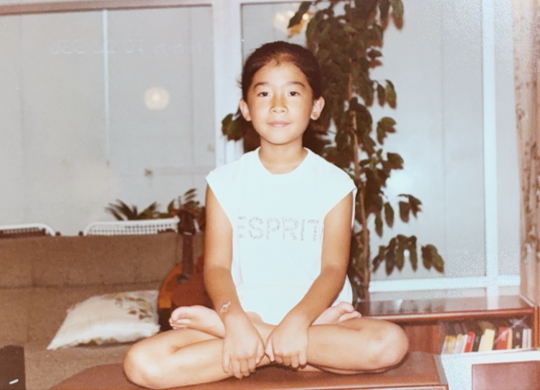
I was born and raised in Seoul, Korea in the '70s and '80s, save for a five-year period when my dad's company moved my family to Hong Kong. There I attended an international school from kindergarten to fourth grade, receiving my schooling in American English.
My first day at a Korean elementary school came in 1986, after my family had returned to Seoul. I showed up in my foreign clothes and deep tan, and my new classmates crowded around me as though I were an alien freshly arrived from another planet. "What kind of food did you eat in Hong Kong?," one of them asked. "Say something in Hong Kong language!," demanded another. None of them had been on an airplane, much less visited another country. Koreans seemed to know little about the world outside of Korea, and little was known about Korea by non-Koreans.
Oh, how the world has changed! I am now a naturalized American who has called San Francisco home since 2003. I watched in wonder as PSY's Gangnam Style became a national sensation here in 2012. The "Korean wave" of pop culture has only intensified since then. BTS first appeared on American late night TV in 2017 and played the Super Bowl halftime show earlier this year. K-dramas proliferate on Netflix and there's a new K-beauty store opening at my local mall. I almost burst with pride when KPop Demon Hunters won the Oscar for best animated feature this spring with Maggie Kang declaring, "This is for Korea and Koreans everywhere!"
Even so, I was not prepared to encounter the familiar sounds of my ancestral music at a PEV rehearsal this fall. But that is just what happened when we first sang through Hyo-won Woo's Cum Sancto Spiritu. Here was a classical choral work with Latin text, yet the melodies, tonal language, and shifting rhythms took me right back to the Korean folk music of my childhood.
The music that immediately came to my mind was the sounds of Leenalchi, a rising Korean pop group that brilliantly incorporates pansori, the Korean art of telling folk stories through song. Like Leenalchi – but in a very different way – Woo weaves together the musical languages of Korea and the West to create something wholly new and original.
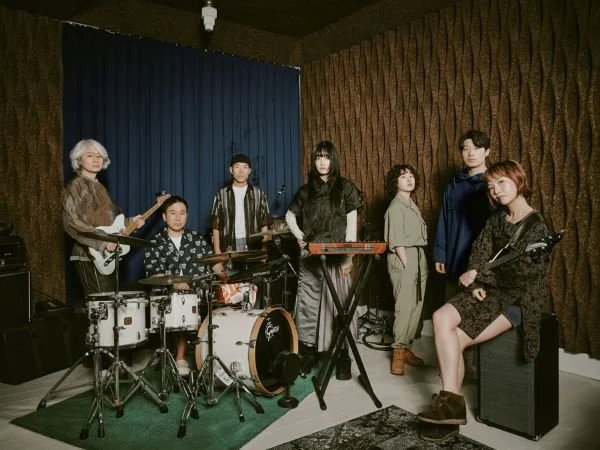
Leenalchi by Swan Studio
It is deeply meaningful for me to be singing this music in this moment. Here I am, oceans away from my homeland, singing Korean harmonies with my choir in Berkeley, California. And here are my American choir mates singing the work of a Korean woman composer, in Latin, that distinctly sounds like the music of my Korean ancestors. It felt all the sweeter to share with the choir what I was hearing and feeling in the moment, and to have everyone in the room excited to listen to Leenalchi and learn more about Korean music.
The world surely could use more moments like these right now – where we all connect deeply with the traditions and artistry of our past, across cultural divides. That is very much the inspiration for this program as Nic envisioned it. I hadn’t expected it to resonate so personally! I can't wait to sing Woo's piece for our audiences this December.
Learn more about PEV’s program Carols of the Stranger, to be performed Dec 5 and 13, 2026.